
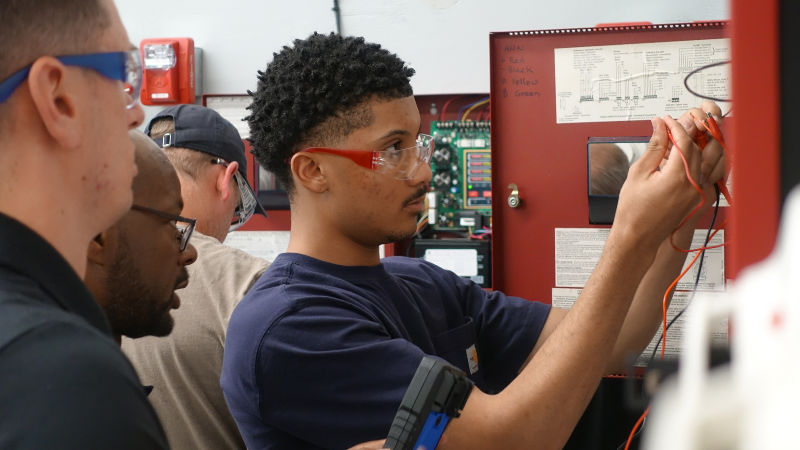
You’ve Put in the Field Time. Now It’s Time to Make It Official.
You know Fire Alarm Systems. You’ve wired panels, traced faults, and read enough NFPA 72 to quote it in your sleep. But without a recognized certification on your résumé, it can feel like your expertise doesn’t carry the weight it deserves.
The NICET Fire Alarm Systems certification changes that. It’s the industry’s benchmark credential for fire alarm professionals — the one employers look for, many states require, and career advancement depends on. Whether you’re just starting out or ready to move into a senior technical role, this roadmap covers everything you need to know about earning — and advancing — your NICET Fire Alarm Systems certification.
What Is NICET Fire Alarm Systems Certification?
The National Institute for Certification in Engineering Technologies (NICET) Fire Alarm Systems (Fire Alarm Systems) certification is a nationally recognized credential for engineering technicians working in the fire alarm industry. It validates your ability to apply knowledge across the full scope of fire alarm work, including:
- System layout and plan preparation
- Equipment selection and installation
- Acceptance testing and commissioning
- Troubleshooting and servicing
- Technical sales
The program is built on NFPA 72, the National Fire Alarm and Signaling Code — the primary standard governing fire alarm system design, installation, and inspection in the United States.
NICET offers two fire alarm credentials:
- Fire Alarm Systems — For professionals with broad fire alarm experience spanning design, installation, maintenance, and inspection.
- Inspection and Testing of Fire Alarm Systems — For professionals who specialize in periodic inspection and maintenance with limited experience in other fire alarm work.
This guide focuses on the Fire Alarm Systems program, which spans four certification levels.
Why NICET Certification Matters for Your Career
Certification isn’t just a line on your résumé. It’s evidence that you’ve been tested, verified, and recognized by the industry’s most respected credentialing body.
Here’s what NICET certification can mean for your career:
- More opportunities. Many employers require or prefer NICET-certified technicians for project work, bids, and contracts.
- Higher earning potential. Certification at higher levels directly correlates with compensation in the field.
- State licensing compliance. Several states require NICET certification as part of fire alarm contractor licensing.
- Career advancement. The path from field technician to project lead to technical manager is clearer when your credentials reflect your expertise.
- Professional recognition. Your NICET certification is publicly verifiable — giving employers, clients, and authorities having jurisdiction (AHJs) confidence in your work.
NICET Fire Alarm Systems Certification: Four Levels, One Clear Path
The Fire Alarm Systems program consists of four progressive levels. Each builds on the last, combining exam performance, documented field experience, and supervisor-verified on-the-job activities.
| Level | Exams Required | Questions | Time | Experience Required | Exam Fee (6/2026) |
| Level I | Level I | 85 | 110 min | 6 months | $230 |
| Level II | Levels I & II | 110 | 155 min | 2 years | $315 |
| Level III | Levels I, II & III | 115 | 170 min | 5 years | $370 |
| Level IV | Levels I, II, III & IV | 120 | 290 min* | 10 years | $425 |
*Level IV includes a scheduled 30-minute break.
Here’s what each level requires — and what it signals to the industry.
NICET Fire Alarm Level I: Building Your Foundation
Who it’s for: Entry-level technicians establishing their credentials and validating their core knowledge.
Exam: 85 questions, 110 minutes, delivered at a Pearson VUE testing center or remotely via OnVue online proctoring.
Experience required: A minimum of six months of experience with fire detection and signaling systems.
Performance verification: Your supervisor must confirm that you’ve successfully performed all Level I performance measures — specific, hands-on job activities defined by NICET.
Level I covers the foundational knowledge every fire alarm technician needs: applicable codes and standards, types of detectors and signaling systems, basic electricity and electronics, power requirements, and building occupancy considerations. It’s where your career credential officially begins.
NICET Fire Alarm Level II: Expanding Your Expertise
Who it’s for: Technicians with solid field experience across multiple fire alarm roles and system types.
Exam: Levels I and II exams, 110 questions, 155 minutes.
Experience required: A minimum of two years of fire detection and signaling systems experience. At least 12 of those months must involve direct Fire Alarm Systems work — including alarm and detection, notification appliances, sprinkler monitoring, and suppression system interfaces — in roles such as installation, inspection, testing, commissioning, sales, plans preparation, or maintenance. Up to 12 months of that total may come from related experience in other life safety electrical systems.
Performance verification: Your supervisor must verify all Levels I and II performance measures.
Level II is where you demonstrate breadth. You’re not just wiring panels — you understand how systems integrate, how code applies to specific building types, and how your work connects to the bigger fire protection picture.
NICET Fire Alarm Level III: Stepping Into Leadership
Who it’s for: Senior technicians moving into technical management, complex project work, and team leadership.
Exam: Levels I, II, and III exams, 115 questions, 170 minutes.
Experience required: A minimum of five years, including at least 45 months of direct Fire Alarm Systems experience. That experience must span multiple functions — installation, maintenance, inspection, testing, commissioning, plans preparation, code compliance review, and project management. The additional years beyond Level II must include field leadership and at least one year in a Fire Alarm Systems technical management role.
Additional requirement: A personal recommendation affirming your capacity for independent engineering technician responsibilities.
This is the level where your expertise earns formal recognition as a technical leader. Most Level III professionals are involved in more complex, multi-system projects and take meaningful responsibility for code compliance decisions.
NICET Fire Alarm Level IV: The Senior Credential
Who it’s for: Highly experienced professionals in technical management, overseeing large-scale or complex fire alarm projects.
Exam: All four levels, 120 questions, 290 minutes (with a scheduled 30-minute break).
Experience required: A minimum of 10 years, including at least 105 months of direct Fire Alarm Systems experience. The additional five years from Level III must include at least two years overseeing fire alarm project management.
Additional requirements: A personal recommendation affirming senior engineering technician responsibilities, plus a detailed description of a major project demonstrating your senior responsibility for a fire alarm system of substantial complexity — multi-zone voice evacuation, suppression system interfaces, networked control units, high-rise applications, or Emergency Responder Communication Enhancement Systems (ERCES).
Level IV is the apex of the Fire Alarm Systems program. It reflects a career built on expertise, leadership, and deep technical command.
What to Expect When You Sit for the Exam
NICET exams are delivered on a computer at Pearson VUE testing centers nationwide. You’ll work through one question at a time, with the ability to move forward and backward. Some questions include graphical exhibits — system drawings, equipment diagrams, or code tables.
Open-book format: You may bring approved reference materials into the testing center. NICET publishes a reference list for each level — know what you’re allowed to bring and how your materials are organized before exam day. Tabbed, labeled NFPA standards can make a measurable difference in how quickly you navigate code lookups under pressure.
Download our our NICET Quick Reference Guide to see what is allowed during your exam:
NICET Quick Reference GuideThe exam currently tests content based on the 2022 edition of NFPA 72. NICET is updating the exam to align with the 2025 edition — updated exams are expected around mid-2027.
Maintaining Your Certification: CPD Every Three Years
Earning your NICET certification is a milestone — keeping it current is a commitment. NICET requires recertification every three years through Continuing Professional Development (CPD) activities.
CPD points can be earned through training, coursework, industry events, and professional development activities. Fire Tech’s fire alarm continuing education courses are designed to help you meet your CPD requirements while deepening your knowledge of current code requirements and best practices — so your recertification cycle becomes an opportunity to grow, not just a box to check.
How to Prepare for Your NICET Fire Alarm Exam
NICET exams are demanding. Many professionals find the exam more challenging than expected. The good news: with the right preparation, you can walk into the testing center with confidence.
Here’s what focused preparation looks like:
Study the content outline first. NICET publishes content outlines for each level that define exactly what topics the exam covers. Treat them as your study blueprint before you crack open a single reference.
Know your reference materials cold. The exam is open-book, but that only helps you if you can find information quickly. Organize and tab your materials well before exam day.
Take a structured exam prep course. A course built specifically around the NICET task list and content outline is the most efficient path to passing. Fire Tech’s NICET Fire Alarm Systems online courses are designed by fire protection experts and aligned directly to NICET’s exam objectives — so every hour you invest moves you forward.
Get hands-on. Code knowledge and field experience reinforce each other. Fire Tech’s fire alarm hands-on workshops put you in real-world scenarios that sharpen both your skills and your exam readiness.
Your Three-Step Path to NICET Certification
You don’t have to figure this out alone. Fire Tech Productions has spent nearly 40 years helping fire protection professionals master industry standards, pass certification exams, and advance their careers. As a NICET Recognized Training Provider, we’ve built our course catalog around what the exam tests — and what you need to succeed in the field.
Here’s how to move forward:
Step 1: Choose Your Training From online exam prep courses and hands-on workshops to tabbed reference standards and study packages, Fire Tech has the resources you need — no matter your certification level or schedule.
Step 2: Master the Codes Gain the knowledge and confidence to work through NFPA 72, pass your exam, and apply what you’ve learned to real Fire Alarm Systems in the field.
Step 3: Get Certified Earn your NICET credential, advance your career, and become the fire alarm professional your team — and your community — can count on.
Browse NICET Fire Alarm Courses
Questions? Contact Our Sales TeamFrequently Asked Questions
- What is the NICET Fire Alarm Systems certification? The NICET Fire Alarm Systems (Fire Alarm Systems) certification is a nationally recognized credential for fire alarm engineering technicians. It validates expertise in fire alarm system design, installation, maintenance, inspection, and testing — based on NFPA 72. The program spans four levels, with progressive experience and exam requirements at each stage.
- How many levels does NICET Fire Alarm Systems certification have? There are four levels — Level I through Level IV. Each requires passing cumulative exams, supervisor-verified performance measures, and progressively greater field experience. Levels III and IV also require a personal recommendation from a qualified reference.
- How much experience do I need for NICET Fire Alarm Level I? You need a minimum of six months of experience with fire detection and signaling systems, plus a passing score on the Level I exam and supervisor verification of Level I performance measures.
- Is the NICET Fire Alarm exam open book? Yes. NICET allows approved reference materials at the testing center. Knowing how to navigate those materials quickly — especially NFPA 72 — is a significant advantage on exam day. Well-organized, tabbed references are worth the investment. Download the NICET Quick Reference Guide from Fire Tech to see what’s allowed.
- How often do I need to recertify my NICET certification? NICET certification must be renewed every three years through Continuing Professional Development (CPD) activities, including coursework, industry training, and professional development.
- What NFPA code does the NICET Fire Alarm exam cover? The current exam is based on the 2022 edition of NFPA 72. NICET is in the process of updating the program to align with the 2025 edition — updated exams are expected around mid-2027.
- Which NICET exams can Fire Tech help me prepare for? Fire Tech Productions is a NICET Recognized Training Provider offering online NICET prep courses in Fire Alarm Systems (Level I-III), Inspection & Testing of Fire Alarms (Level I-II), Water-Based Systems Layout (Level I-III), Inspection & Testing of Water-Based Systems (Level I-III), and Special Hazards Systems (Level I-II).


