
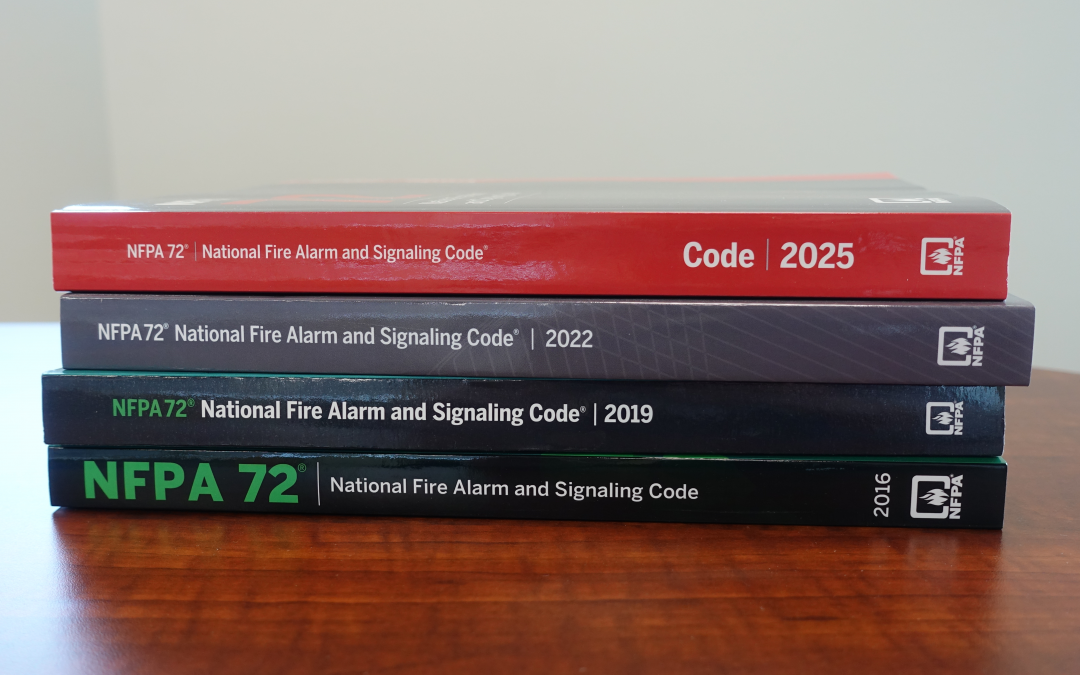
You’ve been in this industry long enough to know that NFPA 72 isn’t a document you read once and file away. It’s a living standard — updated every three years, adopted unevenly across jurisdictions, and capable of shifting requirements you thought were settled in ways that show up at the worst possible moment: mid-submittal, mid-inspection, or mid-exam.
Most experienced fire alarm technicians aren’t starting from zero on code knowledge. You know the framework. You know how the chapters are organized, how pathway survivability classifications work, and why the distinction between a supervising station function and a monitoring function actually matters in the field. What gets professionals at your level isn’t ignorance — it’s the slow drift that happens when you’re heads-down on jobs and a new code cycle quietly changes three things you were confident about.
That drift is worth addressing directly. And that’s exactly what Fire Tech’s code-focused training is built for.
The Edition Gap Is a Real Field Problem
Here’s the detail that trips up even experienced technicians: adopted edition and published edition are not the same thing, and they vary by jurisdiction in ways that don’t always make the news.
As of the 2022 cycle, some jurisdictions are enforcing the 2019 edition of NFPA 72, others have moved to 2022, and a handful are still working from even earlier editions. That means the requirements governing notification appliance circuit configuration, emergency control function interface, or mass notification system signal priority may be materially different depending on which side of a county line you’re working on that week.
The same dynamic applies to NFPA 70. NEC adoption timelines affect the wiring methods, circuit classifications, and power supply configurations that feed directly into fire alarm system design and installation — and those timelines rarely align neatly with NFPA 72 adoption in the same jurisdiction.
If you’re working across multiple jurisdictions — or preparing for a NICET exam — knowing which edition is in force where you’re working isn’t optional background knowledge. It’s the job.
What the NFPA 72 2022 Cycle Changed That’s Worth a Second Look
Even if you reviewed the 2022 edition when it was released, a few areas are worth revisiting because they continue to surface as compliance issues in the field:
Pathway survivability. The 2022 edition refined the requirements for Level 2 and Level 3 pathway survivability, particularly around documentation and as-built drawing requirements. If you’re designing or inspecting systems in high-rise or healthcare occupancies, the specifics matter more than the general concept.
Emergency communications systems. ECS requirements have continued to expand, with more detailed guidance on system integration, voice intelligibility testing, and the relationship between fire alarm and mass notification functions. The interplay between Chapter 24 and the annexes has tripped up more than a few experienced technicians during AHJ reviews.
Inspection, testing, and maintenance table updates. The ITM tables in Chapter 14 saw revisions that affect testing frequencies and acceptance criteria for several initiating device types. The footnotes in the testing table in Chapter 14 were slightly revised and are worth a review. If your inspection forms were built from a prior edition, they may be quietly out of compliance.
Where NICET Fits Into the Code Currency Equation
NICET exams for fire alarm systems — Levels I through IV — are tied to specific code references, and those references update with each exam cycle. If you’re sitting for a Level III or IV exam, or helping a junior technician prepare for lower levels, the edition alignment between your study materials and the current exam blueprint matters significantly.
Recertification is the other piece. NICET’s recertification requirements mandate continuing education through recognized providers, and the most efficient way to meet that requirement is with CEUs that do double duty: renewal credit and substantive code update content at the same time. Hours spent on generic safety topics check the box but don’t move the needle professionally.
Fire Tech’s online courses are built around current code editions, organized by the sections and chapters that matter most to working technicians, and designed to be completed on a schedule that fits around an active workload.
A Practical Reset for Experienced Technicians
Confirm your jurisdiction’s adopted editions. Pull the current adopted editions of both NFPA 72 and NFPA 70 for every jurisdiction you work in regularly. Keep that list somewhere accessible and review it annually.
Run a gap check on your NFPA 72 2022 knowledge. Focus specifically on pathway survivability documentation, ECS integration requirements, and Chapter 14 ITM table changes. If any of those feel uncertain, that’s your starting point.
Align your CEU plan with your NICET exam timeline. If a recertification window is approaching, build your continuing education around code-specific content that also reinforces your exam preparation — not just the fastest available hours.
Ready to close the gap? Explore Fire Tech’s fire alarm courses designed for technicians who already know the code and want to stay sharp on the details that matter. Prefer a live environment? Register for a hands-on workshop and work through current code application with instructors who’ve spent time on the same job sites you have.
The code didn’t stop moving. Neither should you.


