
In July 2025, a five‑alarm fire at Gabriel House in Fall River, Massachusetts, killed 10 residents. Investigators and reporting later revealed the facility’s sprinkler system was overdue for its required five‑year internal inspection, and the sprinkler in the room where the fire began reportedly did not activate. Lawsuits also allege recalled components were never replaced. The tragedy put a spotlight on how lapses in inspection and maintenance can have fatal consequences.
That’s the hard truth for every building owner and inspector: a sprinkler system is only as reliable as its inspection, testing and maintenance. NFPA 25 lays out those ITM requirements—everything from routine visual checks to five‑year internal assessments—and it’s the day‑to‑day discipline that keeps systems ready.
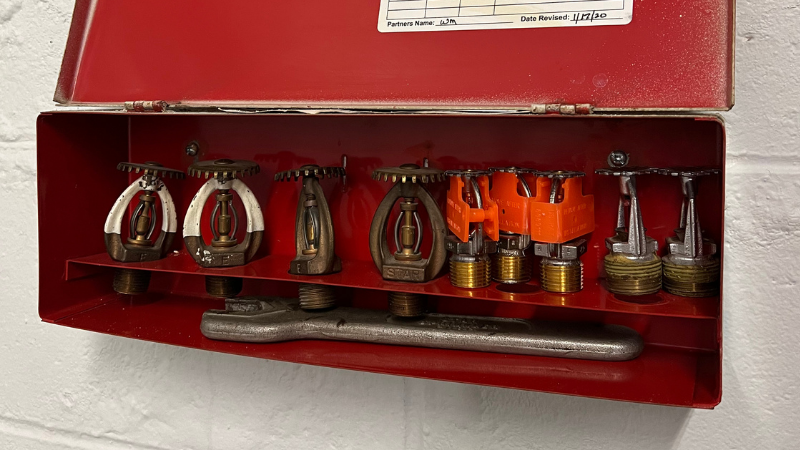
What a “replace-now” sprinkler looks like
At the floor level, NFPA 25 calls for replacement when heads show leakage, corrosion detrimental to performance, physical damage, loss of bulb fluid, loading detrimental to sprinkler performance, or non-manufacturer paint that’s detrimental to performance. If you spot any of those conditions, tag it and take action.
Paint deserves special attention. Overspray on the frame, glass bulb or seat can insulate the thermal element, disturb spray patterns or delay operation—issues that are “detrimental to sprinkler performance,” per the NFPA 25 annex guidance. That’s why many inspectors still treat painted heads as a critical deficiency that warrants swift replacement.
Quick‑response sprinklers raise the stakes. Their thermal element is designed to react faster (governed by a lower response time index), so anything that slows heat transfer—paint, loading or corrosion—can defeat the very purpose of installing quick‑response heads.
Don’t forget the “big interval” checks
Beyond annual visual inspections, the standard requires periodic testing and internal assessments. That overdue five-year internal inspection cited in the Gabriel House coverage is a good reminder: scaling, MIC, obstructions or recalled components, such as sprinkler heads, can sit hidden until a fire tests the sprinkler system. Make the five-year nonnegotiable date on your calendar.
Train like lives depend on it (because they do)
If you’re building or refreshing a sprinkler ITM program, Fire Tech has role‑specific training that maps to NFPA 25:
- NICET Inspection & Testing of Water‑Based Systems (Levels I–III): structured online prep aligned to the 2023 NFPA 25 edition—ideal for inspectors and service teams who want repeatable, code‑based workflows. Explore the series.
- Hands‑on workshop: Inspection & Testing of Fire Sprinkler Systems: two days in the lab on wet and dry systems, acceptance to deficiency tagging. See dates.
- Beginner Fire Sprinkler Inspector Learning Path: a guided on‑ramp for new hires or cross‑training staff. Get the path.
- CEU/CPD bundles: refresh skills and keep credentials current with inspection‑and‑testing bundles for water‑based systems. Browse bundles.
A practical checklist for your next walk‑through
- Inspect Sprinklers from the floor: replace for leakage, corrosion that matters, physical damage, glassbulb fluid loss, loading detrimental to performance, or nonmanufacturer paint that’s detrimental. Document with photos.
- Verify valves and supervision: many large loss fires trace to shut or impaired valves. Confirm position, tamper/seals and supervisory signals before you leave. (Post incident reporting often finds the problem wasn’t the sprinkler—it was the system state.)
- Look beyond the Sprinkler: note recalled models, piping obstruction clues (discolored discharge, pinholes, debris), and schedule the five-year internal if the clock is running out.
Sprinklers have an exceptional record when installed and maintained properly. The lesson from recent headlines is simple: don’t let preventable misses—painted bulbs, shut valves, overdue internal checks—turn a controllable fire into a catastrophe. If you want a proven, step‑by‑step way to level up your team, start with Fire Tech’s Inspection & Testing of Fire Sprinkler Systems Hands-On Workshop.
FAQs
- What does NFPA 25 say about painted sprinklers?
Replace heads with paint that’s detrimental, loading that impairs performance, corrosion, damage, leakage, or loss of bulb fluid. Paint or heavy dust can insulate the thermal element and delay operation. - Do I really need a five‑year internal inspection if heads look fine?
Yes. Internal assessments catch hidden problems—obstructions, scale, or recalled parts—that visual checks can miss. The Fall River coverage shows how overdue internals can become a key factor after a loss.


